The Airedale Terrier: A Yorkshire Original
Born in the rain-soaked valleys of the Aire River in Yorkshire, England, the Airedale Terrier developed not as a gentleman's parlour dog but as a hardworking partner for mills, farms, and riverbanks. Local weavers and miners needed a versatile terrier that could dispatch vermin, retrieve game from cold water, and hold its own against a fox or an otter. The result was the largest of the terrier breeds, a dog built for endurance and grit, with a coat that shrugged off Yorkshire weather and a temperament that refused to quit.
The breed's ancestry draws from the old Black and Tan Terrier crossed with the Otterhound, and that blend explains a great deal about what the Airedale is today. The Otterhound side contributed size, a keen nose, and a love of water. The terrier side supplied the fire, the independence, and the instinct to go to ground when necessary. By the late nineteenth century, breeders in the Aire Valley had refined a dog that could do nearly everything: rat the barn, hunt rabbit, track a wounded stag, and keep the family warm by the fire on a Sunday afternoon. The Kennel Club recognized the breed in 1886, and by the early twentieth century, Airedales were crossing the Atlantic and winning in the show ring.
Size, Structure, and What the Coat Tells You
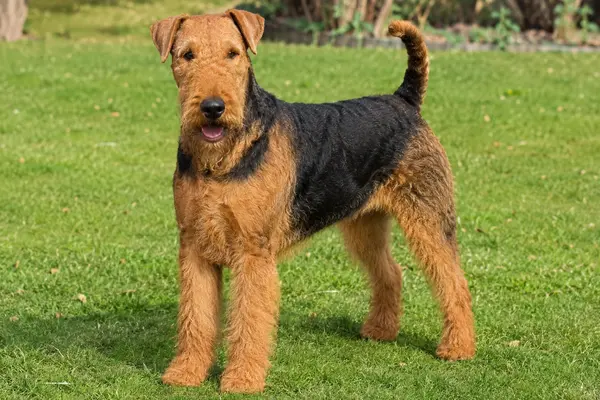
Stand next to an Airedale Terrier and the first thing you notice is the height. Males typically run about twenty-three inches at the shoulder, females a touch shorter, and the overall impression is of a dog that is square, balanced, and built to move all day without tiring. This is not a fragile terrier. An adult Airedale carries substantial bone and muscle, and the head alone — long, flat, and muscular — signals a dog bred for serious work.
The coat is dense and wiry, a hard outer layer over a softer undercoat, and it comes in a distinctive pattern: tan on the head, ears, and legs, with a dark saddle of black or grizzle across the back. That wiry texture is not decorative. It sheds water, resists burrs and brambles, and insulates against cold and heat alike. Airedales that live outdoors or do field work often maintain a harsh coat with little intervention. Show dogs, by contrast, require regular hand-stripping to keep the coat's texture and colour in proper condition. Clipping with shears will soften the coat and dull the colour over time, which is worth knowing if you are considering this breed for the first time. Grooming is not a minor task, and the wiry coat that makes the Airedale so practical in the field demands consistent attention at home.
The Terrier Mind
Understanding the Airedale requires understanding what terriers are, at their core. Terriers were bred to make their own decisions underground, out of sight and earshot of their handler. A fox goes to ground; the terrier follows. There is no time to consult. The dog assesses the situation, decides whether to push forward or wait, and acts. That independence is hardwired into the Airedale, and it shows up in everyday life. An Airedale does not wait to be told what to think about a new object in the house. It investigates. It pokes, sniffs, mouths, and rearranges. Curiosity is not a secondary trait — it is the engine that drives the breed.
This curiosity pairs with genuine problem-solving ability. Airedales figure things out. They learn which cabinet doors swing open, which latches can be nudged, and which garden beds are worth digging after voles move in. They are not the kind of dog that looks to you for permission at every turn. They look, they calculate, and then they act on their own judgment. For an owner who enjoys that kind of engagement, it can be deeply rewarding. For someone expecting the breed to sit back and follow commands without question, it can be startling.
Energy and Purpose
The Airedale was never bred to sit still. The breed was created to work — to patrol, to hunt, to retrieve, to guard — and that drive does not vanish because the dog sleeps on a bed at night. An Airedale that lacks sufficient activity or stimulation will find its own jobs, and those jobs rarely align with what you had in mind. A bored Airedale will dig a crater in the yard, chew through a fence post, or decide that the cat's afternoon nap is the perfect time for a wrestling match.
Physical exercise matters, but it is only part of the equation. A walk around the block is fine as a warm-up, but the Airedale also needs mental work — something that engages the brain as well as the legs. Tracking exercises, nose work, puzzle toys, and structured training sessions all help channel the breed's restless intelligence. Airedales that get both physical and mental exercise are calm, focused, and a pleasure to live with. Those that do not can become destructive, vocal, and relentlessly demanding of attention.
The breed excels in activities that give it a purpose. Flyball, agility, rally obedience, search and rescue, water work — Airedales take to all of them with enthusiasm, provided the training is varied enough to hold their interest. Repetitive drills will lose them quickly. They respond best to handlers who keep sessions short, mix up the exercises, and use rewards that the dog actually values. An Airedale that respects the food in your hand is an Airedale that is paying attention.
Training: A Negotiation, Not a Lecture
Training an Airedale is not the same as training a Labrador or a Border Collie. The Airedale listens, evaluates, and then decides whether your request is worth complying with right now. This is not stubbornness in the way people sometimes use the word. It is discernment. The breed wants to understand why something is being asked, and it will resist commands that seem pointless or contradictory.
Consistency is non-negotiable. If you let an Airedale get away with jumping up today, it will expect the same leniency tomorrow. Fair, firm, and predictable boundaries work best. Harsh corrections tend to backfire — the Airedale does not crumble under pressure; it pushes back. Positive reinforcement, paired with clear consequences for unwanted behaviour, gives the best results. Early socialisation is critical. A puppy that meets a wide range of people, animals, and environments during the first few months grows into an adult that can handle new situations without excessive suspicion or reactivity.
It is worth saying plainly: the Airedale is not the ideal first dog for someone who has never lived with a strong-willed breed. The training process is engaging and often enjoyable, but it demands patience, consistency, and a willingness to think on your feet. Owners who bring experience and confidence to the relationship tend to thrive. Those who expect a dog that simply obeys may find themselves frustrated.
Chasing, Digging, and the Terrier Instincts
Every Airedale carries a strong prey drive. Small, fast-moving things — cats, squirrels, rabbits, chickens — trigger a chase response that can override recall and good manners in an instant. This is not a behavioural flaw; it is the direct result of generations of selective breeding for vermin hunting and game retrieval. Managing that drive requires early and ongoing training, secure fencing, and realistic expectations. An Airedale that spots a rabbit across the yard is not thinking about your recall command. It is thinking about the rabbit.
Digging is another terrier trait that runs deep in the Airedale. The breed digs to pursue burrowing animals, to create a cool spot in the earth, or simply because the soil is loose and interesting. Providing a designated digging area — a sand pit or a section of garden where digging is permitted — can reduce damage to flower beds, but it will not eliminate the instinct. If you garden seriously, you will need to accept that an Airedale shares your outdoor space on its own terms.
Living with Children and Other Animals
Airedales generally do well with children, particularly when raised together. The breed's size and energy level make it a capable playmate for older children who understand how to interact with a large dog. Rough handling can provoke a correction, so supervision is wise with younger kids. Airedales tend to be patient but not infinitely so, and a dog that has been poked, pulled, and chased one too many times will eventually communicate its displeasure.
With other animals, the picture is more nuanced. An Airedale raised alongside a cat from puppyhood will usually accept that cat as part of the household. Introducing an adult Airedale to a cat for the first time is a different proposition entirely, and caution is warranted. The terrier instinct to chase and grab is strong, and a cat that runs will trigger a pursuit. Similarly, smaller dogs may provoke rough play or predatory behaviour. Airedales are not inherently aggressive toward other dogs, but they are confident and will not back down from a confrontation. Early socialisation with other dogs helps, but the breed does best in households where the owner understands and actively manages inter-animal dynamics.
The Coat in Detail: Stripping, Clipping, and Daily Care
The Airedale's wiry coat needs more attention than many owners anticipate. Hand-stripping — pulling dead hair by hand or with a stripping knife — maintains the coat's harsh texture and rich colour. Most show dogs are stripped every six to eight weeks. Pet Airedales are often clipped instead, which is easier and faster but softens the coat over successive generations of clipping. A clipped coat may lose its weather-resistant qualities, which matters if the dog spends time outdoors in rain or snow.
Regardless of whether the coat is stripped or clipped, regular brushing prevents matting, especially around the legs, underbelly, and behind the ears. The beard collects food and water, so expect to wipe it down after meals. Ears need checking for debris and moisture, and nails require trimming on a regular schedule. Grooming is not a once-a-month task with this breed — it is woven into the weekly routine.
The "King of Terriers" Title
The Airedale Terrier is sometimes called the King of Terriers, a reference to its status as the largest of the terrier breeds. The title is descriptive rather than ceremonial. The Airedale holds the size record among terriers, and its range of working abilities — from vermin control to water retrieval to service work — earned it a reputation for versatility that no other terrier matched in its heyday. The title does not imply that the Airedale is superior to other terriers; it simply acknowledges that the breed occupies a distinctive place in the terrier family by virtue of its physical scale and the breadth of its original purpose.
Working Roles Past and Present
The Airedale's working résumé is long and varied. During the First World War, Airedales served as messenger dogs, Red Cross dogs, and sentries on the Western Front. Their courage under fire and their ability to navigate difficult terrain made them valuable military assets. After the war, returning soldiers brought Airedales home to the United States and Canada, where the breed's popularity surged.
In the decades that followed, Airedales worked as police dogs in several European countries, served as guide dogs for the blind in the early days of guide dog programmes, and hunted everything from raccoons to boar in the Appalachian hills of the American South. Today, the breed's working roles have narrowed, but Airedales still appear in search and rescue, therapy work, and competitive obedience. The drive to work has not disappeared — it simply needs an outlet.
Health and Longevity
Airedales are a generally robust breed, but like all breeds, they carry certain health risks. Hip dysplasia, certain forms of cancer, and skin conditions appear in the breed with some regularity. Responsible breeders screen for hip and elbow problems, and prospective owners should ask about health testing before purchasing a puppy. Airedales typically live ten to thirteen years, and those that receive regular exercise, appropriate nutrition, and routine veterinary care often maintain their energy and sharpness well into their senior years.
The breed's wiry coat, while low-shedding compared to many breeds, can mask skin issues beneath its dense texture. Regular grooming sessions double as opportunities to check for lumps, hot spots, or parasites that might otherwise go unnoticed. The beard, as mentioned, traps moisture and debris, and some Airedales develop skin irritation around the muzzle if the beard is not kept clean and dry.
A Breed That Demands Engagement
The Airedale Terrier is not a dog that thrives on neglect. It needs space to move, work to do, and a handler who respects its intelligence and independence. The breed gives back enormously to those who invest in the relationship — with humour, with loyalty, with a presence that fills a room. But the investment must be genuine. An Airedale left alone in a backyard with nothing to do will become a problem. An Airedale included in the daily life of its family, given structure and purpose, will be one of the most rewarding dogs you will ever live with.
Consider what you want from a dog. If you want a breed that challenges you, that makes you think, that demands your attention and repays it tenfold, the Airedale Terrier deserves serious consideration. The breed is not for everyone, and that is precisely the point. The Airedale was built for work, for engagement, for a life of purpose — and the dogs that get that life are magnificent.