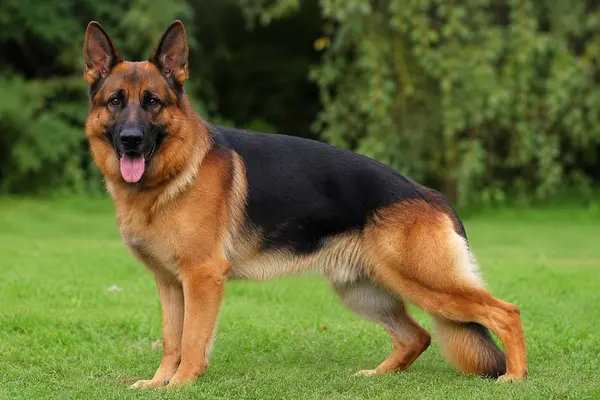
An Energetic Working Dog from the Swiss Alps
The Appenzeller Sennenhund is a medium-sized herding breed developed in the Appenzell region of northeastern Switzerland. One of four Swiss mountain dogs — alongside the Bernese, Entlebucher, and Greater Swiss — the Appenzeller was shaped by generations of hard work on alpine farms, where agility, intelligence, and a strong work ethic were not optional qualities. This is a dog bred for purpose, not appearance, and that heritage shows in every aspect of its temperament and movement.
Though less internationally recognised than the Bernese Mountain Dog, the Appenzeller has a devoted following among people who understand what the breed actually needs. It is not a casual pet. It is a capable, driven working dog that thrives when given genuine tasks and structured daily activity. Without these, it will create its own entertainment — and most owners would prefer that not happen.
Roots in the Appenzell Countryside
The Appenzell region, nestled in the Alpstein mountain range, has a long tradition of dairy farming and cattle herding. Farmers needed dogs that could drive cattle across steep, uneven terrain, manage livestock in tight barn spaces, and guard the homestead at night. The Appenzeller Sennenhund filled all of these roles with enthusiasm.
Historical accounts suggest the breed developed over several centuries, shaped more by function than formal breeding programmes. Local farmers selected for working ability, stamina, and a responsive temperament. The result was a dog that could keep up with cattle on mountain trails, respond to whistle commands at a distance, and then return home to guard the farmstead. The breed was officially recognised by the Swiss Kennel Club in the early twentieth century, but by that point, it had already been doing its job for generations.
Built for Work, Not Just for Show
The Appenzeller's physical construction reflects its working origins. It is a proportionately built dog, neither too heavy nor too light, with a compact frame that allows quick direction changes on rough ground. The breed typically weighs between twenty-two and thirty-two kilograms, with a deep chest that supports endurance and well-angled hindquarters that provide powerful drive. Movement is one of the breed's most distinctive features — it covers ground efficiently, with a fluid, balanced gait that suggests both speed and control.
Unlike some working breeds that rely on raw strength, the Appenzeller relies on agility and coordination. It can navigate rocky slopes, squeeze through narrow gaps in stone walls, and maintain footing on wet grass without hesitation. This physical confidence extends to everyday life. An Appenzeller moving through a garden or across a field does so with purpose and spatial awareness, rarely stumbling or appearing clumsy.
The head is clean-cut, with a flat skull and a moderately long muzzle. Ears are triangular, set high, and fold forward. The expression is alert and attentive, suggesting a dog that is always processing information about its environment. The tail is carried in a gentle curve, often raised when the dog is active or interested in something.
Cattle Driving and Farm Responsibilities
The Appenzeller's primary historical role was driving cattle to and from alpine pastures, a task that required both courage and subtlety. The dog had to move animals much larger than itself, using barking, nipping, and body pressure to keep cattle moving in the right direction. Unlike a livestock guardian, which stays with the herd and deters predators, a herding dog directs movement — and that distinction matters when understanding the breed's behaviour.
On traditional Swiss farms, the Appenzeller also served as a general-purpose working dog. It helped manage smaller livestock, carried messages between farmsteads, and provided a layer of security at night. The breed's alertness made it an effective watchdog, quick to signal the approach of strangers or unfamiliar animals. This combination of herding ability and watchfulness made the Appenzeller indispensable in rural communities where resources were scarce and every animal had to earn its place.
These roles demanded a dog that could work independently when separated from the handler, make decisions under pressure, and switch between tasks without confusion. The modern Appenzeller retains these cognitive traits, which is both its greatest asset and its greatest challenge in a domestic setting.
A Distinctive Voice
One trait that surprises many first-time owners is the Appenzeller's vocal nature. The breed has a loud, resonant bark that carries well over distance — a useful quality when calling cattle across a mountain meadow, less convenient in a suburban garden at six in the morning. The bark is not excessive for its own sake; it serves a purpose. The Appenzeller barks to alert, to direct, to express excitement, and occasionally to object to something it finds unsatisfactory.
Training can shape when and how the dog barks, but the tendency toward vocalisation is deeply embedded. Potential owners who live in noise-sensitive housing or have close neighbours should consider this carefully. The breed does not do well when constantly silenced — its voice is part of how it communicates and processes the world around it.
Watchfulness and Environmental Awareness
The Appenzeller notices things. It tracks movement, monitors changes in routine, and pays close attention to the activities of household members. This is not the same as anxiety or reactivity, though poorly socialised dogs can develop those traits. A well-adjusted Appenzeller observes its surroundings with calm interest, ready to respond if something seems unusual but not on edge about everyday stimuli.
This watchfulness makes the breed naturally inclined toward guarding territory and family. The Appenzeller tends to position itself where it can see approaching visitors, and it will announce their arrival. With proper early socialisation, this instinct manifests as alertness rather than aggression. Without it, the dog may become suspicious of unfamiliar people or animals, a tendency that can be difficult to reverse in adulthood.
The breed's awareness extends to household dynamics. Appenzellers typically track the movements of family members throughout the day, adjusting their own position accordingly. A dog that sees someone reaching for a jacket and keys will often move toward the door before the person does. This attentiveness is endearing, but it also means the breed does well in households where routines are somewhat predictable and the dog can anticipate what comes next.
Life Inside the Home
Despite its outdoor working heritage, the Appenzeller is not a dog that thrives when isolated in a kennel or left alone in a garden for extended periods. The breed was developed to live alongside farmers and their families, participating in the daily rhythm of the household. It wants to be where the action is, whether that means lying in the kitchen while someone cooks or following a child from room to room.
This closeness to family life means the Appenzeller develops strong bonds with its household members. It is attentive to emotional states, often responding to changes in mood or energy levels. A quiet, calm household suits the breed well, as does a home where people are regularly present. Environments where the dog spends most of its time alone are poor matches for this breed's social needs.
The Appenzeller generally interacts well with children, particularly if raised alongside them. Its medium size and sturdy build make it tolerant of the physical play that younger children often engage in, though supervision is always wise with any breed. The dog tends to be protective of children it considers part of its family group, a trait that traces back to its farm guardian role.
Training Needs and Mental Stimulation
The Appenzeller is an intelligent dog that learns quickly, but intelligence without direction leads to problems. This breed needs structured training from an early age, not because it is inherently difficult, but because it is inclined to make its own decisions. Without clear guidance and consistent boundaries, an Appenzeller will figure out how to get what it wants — and what it wants is often at odds with what the owner had in mind.
Variety in training is particularly important. Repetitive obedience drills will hold the breed's attention for a limited time before it moves on to more interesting thoughts. Incorporating different exercises, new environments, and practical tasks keeps the dog engaged. Herding trials, agility courses, nosework, and advanced obedience all provide the kind of mental challenge the breed craves.
Practical tasks work especially well. The Appenzeller responds to having a job, even an artificial one. Carrying a backpack on hikes, learning to open and close doors on command, or practising directional control at a distance all satisfy the breed's working instincts. Owners who think creatively about how to give the dog purposeful activity will find the Appenzeller an enthusiastic and responsive partner.
Punishment-based training methods are counterproductive with this breed. The Appenzeller is sensitive to tone and timing, and it will shut down or become defensive if treated harshly. Positive reinforcement, clear communication, and fair expectations produce far better results. The breed respects a confident handler who sets consistent rules, but it does not respond well to intimidation.
Herding Behaviour in Domestic Settings
The Appenzeller's herding instincts do not disappear simply because the dog lives in a suburban house rather than on an alpine farm. Many Appenzellers will attempt to herd children, other pets, or even adults, using the same techniques they would apply to cattle. This can manifest as nipping at heels, circling, barking to direct movement, or body-blocking to control direction.
These behaviours are normal expressions of the breed's instincts, but they need to be managed. Teaching a reliable recall and a solid "leave it" command gives the owner tools to interrupt herding sequences before they escalate. Providing alternative outlets — such as herding trials or interactive toys that require problem-solving — can redirect the impulse toward appropriate activities.
Households with other animals should introduce the Appenzeller carefully. The breed's drive to control movement can cause friction with cats or small dogs that prefer to move freely. Early socialisation and controlled introductions help, but some Appenzellers may never be fully reliable off-lead around smaller animals.
With Children and Other Household Pets
As mentioned, the Appenzeller generally does well with children, especially those it has grown up with. Its patient, tolerant nature in familiar company makes it a reliable companion for family activities. The breed enjoys active play and can keep up with older children on walks, hikes, and outdoor adventures. With younger children, the dog tends to be gentler, adjusting its energy level to match the situation.
With other dogs, the Appenzeller is usually sociable, particularly if socialised early. It can live comfortably in multi-dog households, though its assertive nature may lead to minor conflicts with dogs of similar temperament. The breed is generally respectful of other dogs' space once proper introductions have been made.
The relationship with cats requires more careful management. An Appenzeller that grows up with a cat from puppyhood will typically accept it as part of the family. Introducing a cat to an adult Appenzeller with strong herding instincts is more challenging and should be done gradually, with supervision at every stage.
Where the Appenzeller Thrives
Rural environments with space to run and tasks to perform are the Appenzeller's natural habitat. Farms, large properties with secure fencing, and homes near open countryside give the breed the room it needs to exercise both body and mind. These settings also provide natural opportunities for the dog to engage with its environment — tracking scents, monitoring wildlife, and keeping watch over territory.
Suburban living can work, provided the owner commits to daily exercise that goes beyond a casual walk around the block. The Appenzeller needs vigorous activity — long hikes, running alongside a bicycle, or structured play sessions that challenge its endurance and coordination. A daily walk of thirty minutes will not satisfy this breed. Expect to provide at least one to two hours of active exercise, supplemented by mental stimulation throughout the day.
The breed is less suited to apartment living, particularly in urban areas with noise restrictions and limited outdoor space. The combination of vocalisation, exercise needs, and territorial instincts creates challenges in close quarters. An Appenzeller in a small flat with no garden and an owner who works long hours is a recipe for frustration on both sides.
Secure Space and Containment
Fencing matters with this breed. The Appenzeller is an athletic, determined dog that can clear obstacles that would stop less motivated breeds. Solid fencing of at least six feet is recommended, and the dog should be checked regularly for digging at fence bases or testing weak points. An Appenzeller that sees something interesting beyond its boundary — a squirrel, a passing dog, a person it does not recognise — will find a way to reach it if the barrier is inadequate.
Off-lead freedom in unenclosed areas is risky unless the dog has an exceptionally reliable recall. Even well-trained Appenzellers can be triggered by movement or scent to bolt, and their speed means they can cover significant ground before the owner can respond. Long lines provide a compromise, allowing the dog to explore while maintaining control.
The breed also benefits from defined space within the home. A consistent sleeping area, a regular feeding station, and a clear routine help the Appenzeller feel secure. The breed does not cope well with constant upheaval or unpredictable schedules, which can increase anxiety and vocalisation.
Coat Care and Seasonal Shedding
The Appenzeller's coat is dense, medium-length, and weather-resistant — practical qualities for a dog that worked outdoors in alpine conditions. The outer coat lies flat against the body, while a thick undercoat provides insulation against cold and wet weather. The coat sheds year-round, with heavier shedding occurring during seasonal transitions in spring and autumn.
Regular brushing — two to three times per week during normal shedding, daily during moulting periods — keeps the coat manageable and reduces the amount of hair deposited on furniture and clothing. Bathing is rarely necessary, as the coat's natural oils provide water resistance. Over-bathing strips these oils and can make the coat dull and dry.
The breed tolerates cold weather well, thanks to its double coat, but can overheat in hot climates if exercise is not adjusted accordingly. Access to shade and water during warm weather is essential, and strenuous activity should be scheduled for cooler parts of the day during summer months.
How the Appenzeller Differs from Related Breeds
The four Swiss mountain breeds share a common heritage but diverge significantly in size, temperament, and function. The Bernese Mountain Dog is the largest and heaviest of the four, bred primarily for drafting and general farm work rather than active herding. It moves more slowly, requires less daily exercise, and has a calmer household presence. The Bernese is also prone to more serious health issues, including certain cancers, which is a significant consideration for prospective owners.
The Greater Swiss Mountain Dog is similarly large and heavy-boned, built for pulling rather than quick movement. It shares the Appenzeller's watchdog instincts but lacks the same level of agility and speed. The Greater Swiss is a powerful, steady dog, better suited to households that want a large guardian without the high exercise demands of a herding breed.
The Entlebucher Sennenhund is the smallest of the four, but it shares the Appenzeller's herding drive and energy level. The Entlebucher is compact and fast, with a bold personality that can border on stubbornness. It requires similar levels of exercise and mental stimulation, though its smaller size makes it slightly more adaptable to smaller living spaces.
What sets the Appenzeller apart is its combination of speed, endurance, and vocal expressiveness. It is the most agile of the four breeds, the most inclined to herd, and the most vocal. These traits make it the most demanding in terms of daily activity and training, but they also make it the most capable in active, task-oriented roles.
Why an Inactive Household Is a Poor Match
The Appenzeller Sennenhund is not a dog that adapts to inactivity. It was bred to work full days on demanding terrain, and while modern life does not require it to drive cattle, the underlying drive remains. An owner who works long hours, prefers quiet evenings at home, and can offer only a short daily walk will find the breed's energy and persistence exhausting.
Without sufficient exercise and mental engagement, the Appenzeller develops Behavioural problems. Excessive barking, destructive chewing, escape attempts, and neurotic behaviours are common in under-stimulated dogs of this breed. The dog does not become "bad" — it becomes frustrated, and that frustration manifests in ways that strain the human-animal relationship.
The breed also demands an owner who understands working-dog psychology. The Appenzeller is not manipulative or dominant; it is simply doing what it was bred to do. An owner who interprets herding behaviour as aggression, or who punishes the dog for barking at perceived threats, will damage the trust that makes the breed responsive and cooperative.
People who lead active, outdoor lifestyles and want a dog that participates fully in those activities will find the Appenzeller an outstanding partner. Those who want a calm, undemanding pet for occasional walks and relaxed weekends should look elsewhere. The breed is honest about what it needs — the question is whether the household can provide it.