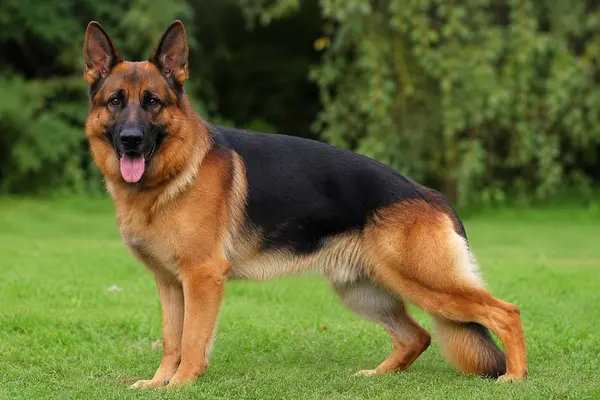
German Shepherd
The German Shepherd is a dog that demands more than casual admiration. It is a breed shaped by deliberate work, bred for function first, and carrying a reputation built over more than a century of service alongside humans. Understanding this breed means looking past the popular image of a heroic police dog or a devoted family protector and seeing the living, thinking animal underneath — one with specific needs, real limitations, and extraordinary potential when placed in the right hands.
Origins in German Herding Country
The German Shepherd's story begins not in police stations or military kennels but on the farms and pastures of late nineteenth-century Germany. In 1899, Max von Stephanitz attended a dog show and saw Hektor Linksrhein, a gray-coated herding dog whose structure, temperament, and working drive impressed him deeply. Von Stephanitz purchased the dog, renamed it Horand von Grafrath, and established the Verein für Deutsche Schäferhund — the society that would formalize the breed.
Von Stephanitz's philosophy was blunt and influential: breeding should serve function. He believed the German Shepherd should be a working dog above all else, one whose intelligence and trainability made it adaptable to tasks beyond herding. This vision proved prescient. As Germany industrialized and rural herding declined, the breed shifted seamlessly into police work, military service, guide-dog roles, and search-and-rescue operations.
A Working Brain in a Working Body
What sets the German Shepherd apart from many other breeds is not its appearance or its bite force — both of which are exaggerated in popular culture — but its cognitive architecture. These dogs think actively. They assess situations, respond to environmental cues, and make decisions based on accumulated experience. This mental energy is both the breed's greatest asset and its most common source of problems.
A German Shepherd that receives nothing more than food, water, and a walk around the block does not simply become calm. It becomes restless, anxious, and often destructive. The breed requires mental engagement — problem-solving exercises, structured tasks, or work that channels its natural attentiveness. Without it, the dog's intelligence turns inward, producing neurotic behaviors like obsessive spinning, shadow-chasing, or chronic barking at perceived threats.
Temperament: Confidence Versus Reactivity
A well-bred German Shepherd possesses what handlers call "stable confidence." This means the dog approaches new situations with curiosity rather than fear, maintains composure under pressure, and recovers quickly from startling events. Stable confidence looks quiet from the outside — it is not dramatic or showy — but it is the foundation for everything the breed is capable of.
Reactivity, by contrast, is frequently mistaken for confidence. A dog that lunges at strangers, barks aggressively at other dogs, or guards resources with escalating intensity is not demonstrating bravery. It is expressing anxiety, insecurity, or a lack of impulse control. Unfortunately, popular media and online content often blur this distinction, encouraging owners to interpret fearful aggression as protective instinct.
The difference matters. A confidently raised German Shepherd can navigate busy environments, remain calm around unfamiliar people, and focus on tasks despite distractions. A reactive one becomes a management challenge — unpredictable, stressful for both dog and handler, and potentially dangerous.
Socialisation Is Learning, Not Forcing
Effective socialisation for a German Shepherd involves controlled, positive exposure to a wide range of experiences — different surfaces, sounds, people, animals, and environments — during the critical developmental window from roughly eight weeks to sixteen months. This is not about flooding the puppy with stimulation or forcing it to interact with every dog at the park. It is about creating calm, rewarding associations with novelty.
A German Shepherd puppy that meets a person in a wheelchair during a quiet walk and receives a treat has learned something valuable: unfamiliar things are not threats. A puppy dragged into a chaotic dog park and overwhelmed by larger, rougher dogs has learned the opposite. The quality of socialisation matters far more than the quantity.
Owners who skip or rush this process often discover the consequences during adolescence, when the dog's natural wariness crystallizes into suspicion of anything unfamiliar. By twelve to eighteen months, a poorly socialised German Shepherd may treat every delivery person, jogger, or visiting relative as an intruder.
Watchfulness and Environmental Sensitivity
German Shepherds notice things. They track movement, monitor changes in household routine, and respond to shifts in their owner's emotional state. This watchfulness is not trained into the breed — it is inherent. A German Shepherd in a quiet home will still observe the street from the window, still alert to unusual sounds, still register when a family member is distressed.
This sensitivity extends to the dog's environment. German Shepherds are often highly responsive to household tension. An argument between family members, a chaotic holiday gathering, or a sudden change in schedule can trigger anxiety, which may manifest as clinginess, loss of appetite, or guarding behavior. Providing a consistent routine and a quiet retreat space helps the dog regulate itself.
Strangers, Visitors, and the Family Circle
German Shepherds typically draw a clear line between family and strangers. They bond deeply with their household, often attaching most strongly to a primary handler, and treat everyone else with measured caution. This is not a breed that greets the mail carrier with a wagging tail and an open heart. Initial wariness around unfamiliar people is normal and, within reasonable limits, desirable.
The goal is not to eliminate this wariness but to teach the dog that guests, once inside the home, are not threats. A German Shepherd that can settle while friends visit, accept handling from the veterinarian without resistance, and remain composed when strangers approach its owner in public has achieved a functional level of social tolerance. Achieving this requires patient, consistent exposure combined with clear communication from the handler.
Children and Other Animals
With children, German Shepherds can be remarkably gentle and attentive, provided the dog has been raised around young people and the children have been taught how to interact respectfully with a large, powerful animal. The breed's natural watchfulness often extends to household children, and many German Shepherds position themselves between a toddler and any perceived source of danger — sometimes overzealously.
With other animals, the picture is more nuanced. German Shepherds have a strong prey drive, which can make cohabitation with cats, rabbits, or small dogs challenging if the prey drive has not been addressed during training and socialisation. Early, supervised introductions and ongoing management are essential. Some German Shepherds live peacefully with cats from puppyhood; others never fully suppress the impulse to chase.
With other dogs, German Shepherds can be selective. Same-sex aggression is common in the breed, and many German Shepherds prefer to be the only dog in the household. Dog parks are not a natural fit for most individuals, regardless of training.
Working Lines Versus Show Lines
The distinction between working-line and show-line German Shepherds is real and significant, though it exists on a spectrum rather than as a clean binary. Working-line dogs — those bred from parents with active careers in police work, military service, or competitive obedience — tend to be higher in drive, more intense, and more demanding of structured activity. They are bred for performance metrics: obedience scores, bite-work certification, search-and-rescue certification.
Show-line dogs, particularly those bred under the German SV (Schäferhund Verein) system, are selected partly for appearance — specifically, the breed's characteristic sloped topline and angulated rear. Show-line dogs are often calmer and more predictable in temperament, though individual variation exists. The exaggerated rear angulation common in some show lines has drawn criticism for contributing to mobility issues.
Neither category is inherently superior. A working-line dog in a sedentary household will become a problem. A show-line dog can excel in obedience, agility, or therapy work with appropriate motivation. The critical factor is matching the individual dog's energy level and drive to the owner's lifestyle and training commitment.
Mental Work and Structured Activity
German Shepherds thrive on having a job. This does not necessarily mean formal protection work or police certification. It means structured mental engagement — learning new commands, solving puzzle toys, participating in nose-work or tracking exercises, or performing household tasks like retrieving specific items on cue.
The breed's responsiveness to training is well documented, but responsiveness requires a trainer who communicates clearly and consistently. German Shepherds do not respond well to harsh corrections or inconsistent rules. They shut down under intimidation and lose motivation under confusion. Positive reinforcement combined with clear boundaries produces the best results.
Physical exercise matters, but it is insufficient on its own. A German Shepherd that runs five miles a day but receives no mental stimulation will still exhibit anxiety and destructive behavior. The combination of physical activity and cognitive challenge is what produces a settled, manageable dog.
Coat Care and Shedding Reality
The German Shepherd's double coat — dense undercoat beneath a harsh outer layer — serves the breed well in its original working environment but poses a daily nuisance for household management. These dogs shed heavily, year-round, with dramatic "blowouts" twice yearly when the undercoat releases in clumps. Regular brushing — ideally several times per week — reduces but does not eliminate the volume of hair.
The coat comes in several recognized colors, including black and tan, sable, all black, and bi-color. Rarer colors like blue, liver, or white exist but are not accepted in most breed standards. Coat length varies, with long-coated individuals appearing occasionally.
Owners who are bothered by pet hair on furniture, clothing, and food preparation surfaces should consider this reality before committing to the breed.
Popularity and Its Consequences
The German Shepherd has ranked among the most popular dog breeds worldwide for decades. This popularity has had a corrosive effect on breed quality. High demand drives mass production, and mass production prioritizes quantity over temperament testing, health screening, and functional evaluation. Puppy mills and irresponsible breeders produce German Shepherds with nervous dispositions, structural problems, and unpredictable behavior — all sold at a fraction of the price charged by reputable breeders.
The result is a breed with extreme variability. One German Shepherd may be calm, confident, and adaptable. The next, from the same general population, may be anxious, reactive, and unmanageable. This inconsistency makes the breed a risky choice for inexperienced owners who assume the breed's popularity guarantees predictability.
Choosing a German Shepherd from a breeder who conducts health testing, evaluates temperament in breeding stock, and actively participates in working or conformation events significantly increases the odds of acquiring a stable, capable dog. It does not eliminate risk — genetics are probabilistic, not deterministic — but it improves the starting point considerably.
The Responsibility of Ownership
German Shepherds are not starter dogs. They are not dogs for people who want a quiet, low-maintenance pet that occasionally plays fetch. They are dogs for people who understand that training is an ongoing process, not a one-time event. They are dogs for households that can provide consistent structure, regular mental engagement, and firm but gentle guidance through the breed's natural developmental phases — particularly adolescence, which in German Shepherds can extend well beyond two years.
The breed rewards commitment with remarkable partnership. A well-raised German Shepherd reads its handler's intentions, anticipates needs, and responds with a precision that can feel almost intuitive. But this partnership does not emerge automatically. It is built, daily, through work, patience, and mutual understanding.
For those willing to invest what this breed requires, the German Shepherd offers something few breeds can match: a dog that thinks alongside its person, that rises to meet challenges, and that embodies the original vision of its creators — a working partner of exceptional versatility and depth.