A Small Bulldog Becomes a Parisian Icon
The French Bulldog's story begins not in France but in England, where lace workers in Nottingham and surrounding industrial towns kept small bulldog-type dogs as companions. These were not working dogs in the traditional sense. They sat on laps in workshops, slept near beds, and kept company during long hours of meticulous handiwork. When the Industrial Revolution displaced many of these workers to France, they brought the small bulldogs with them.
In France, the dogs found a new audience. Artists, bohemians, and café society took to them with enthusiasm. Their bat-like ears—unlike the rose ears of the English Bulldog—set them apart visually, and over time French breeders refined the type into something distinctly its own. By the late nineteenth century, the French Bulldog had become fashionable across Europe and was making inroads in America, where it was embraced by urban dwellers and high society alike.
The breed's trajectory from workshop companion to international icon says something about its fundamental appeal. The French Bulldog was never bred to herd, guard, hunt, or retrieve. It was bred to be near people. That history shapes everything about how the dog behaves in a modern home.
Build and Proportions
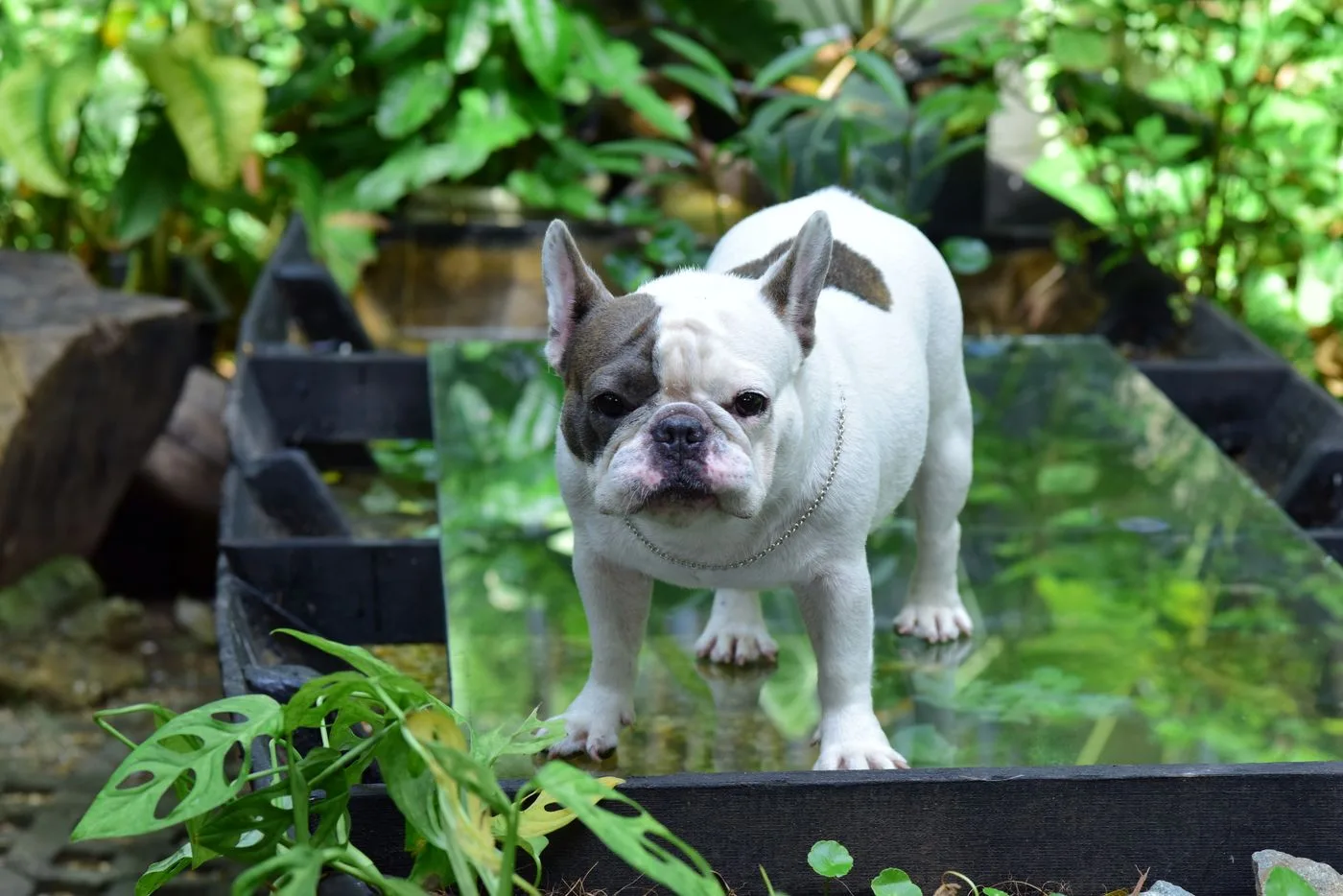
The French Bulldog is compact, muscular, and substantial for its size. Adults typically weigh under twenty-eight pounds, but the body is dense and well-boned, giving the impression of a much sturdier animal. The head is large and square, with heavy wrinkles above the short muzzle. The ears—broad at the base, rounded at the top, and set high—are the breed's most recognizable feature and give the dog an alert, slightly comical expression.
The muzzle is short and broad, with an undershot jaw. The body is short-coupled and deep-chested, with a natural tendency toward a broad, rolling gait. The tail is naturally short, either straight or screwed, and carried low. Movement is fluid and purposeful when the dog is well-proportioned, though the compact frame means the French Bulldog is never going to be a graceful runner.
Coat colors include brindle, fawn, cream, and white, with various combinations accepted by breed standards. The coat itself is short, fine-textured, and smooth against the body.
Life in an Apartment
Few breeds are as naturally suited to apartment living as the French Bulldog. The dog does not require a large territory to feel settled. A modest living space, provided it is occupied by its people, is more than sufficient. The French Bulldog is not a dog that will pace the floors out of boredom or frustration, though it will certainly express itself vocally when something captures its attention.
What the breed does need is proximity to its people. A French Bulldog left alone in a large house may be no happier than one in a small apartment, because the issue is not square footage but company. The dog bonds closely with the household and does not thrive when isolated for long stretches. In a busy household where someone is usually home, or where the dog can accompany its owner to various activities, the apartment becomes irrelevant.
Noise can be a consideration. French Bulldogs do bark, and they tend to be alert and vocal about visitors, delivery people, and unfamiliar sounds. In close quarters, this is worth addressing early with consistent, calm redirection.
How Active Is a French Bulldog?
The French Bulldog is not a couch potato, despite its reputation. It is a moderately active dog that enjoys walks, play sessions, and exploration of its surroundings. What distinguishes its activity level is the ceiling. This is a breed that cannot sustain prolonged, strenuous exercise, particularly in warm or humid conditions. Brisk walks of twenty to thirty minutes suit most adults, and a bit of playtime in the house or yard adds variety.
The breed enjoys mental engagement as much as physical movement. Puzzle toys, brief training games, and interactive play hold its interest. A French Bulldog that is never mentally stimulated may channel its energy into less desirable outlets—barking, chewing, or digging at the furniture.
What the breed does not do is marathon. Jogging long distances, hours of fetch, or vigorous outdoor activity in heat will exhaust and distress a French Bulldog. The dog will let you know when it has had enough, typically by sitting down and refusing to move further. Respect the boundary. The French Bulldog's tolerance for exertion has real limits, and pushing past them is not a matter of willpower but of physiology.
Temperament and Temperament Alone
The French Bulldog is, above all, a companion dog. It attaches to people with a single-minded devotion that can be both endearing and, at times, demanding. The dog wants to be where you are, doing what you are doing, or at least observing the proceedings from a nearby cushion. Independence is not the breed's strong suit.
Stubbornness is a well-documented trait. The French Bulldog has its own ideas about how things should proceed, and it does not always agree with the owner's preferences. This is not defiance in the aggressive sense. The dog is not challenging authority; it is simply exercising a stubborn streak that was never bred out because the breed was never required to comply with complex commands in a working context. The result is a dog that can be willful, selective in its obedience, and occasionally maddening.
Playfulness persists well into adulthood. French Bulldogs retain a puppyish exuberance that makes them entertaining housemates. They play-bow, chase, and engage in goofy antics that defy their stocky build. They also have a strong streak of clowning, often deliberately seeking attention through performative behaviour.
The flip side is sensitivity. French Bulldogs are attuned to their owners' moods and can become anxious or withdrawn if the household atmosphere is tense. They do not handle conflict well, and harsh discipline is counterproductive. A raised voice may shut the dog down entirely, leading to avoidance rather than compliance.
Training Without Battles
Effective training with a French Bulldog requires brevity, creativity, and low expectations for long sessions. The dog learns well in short bursts of five to ten minutes, ideally motivated by high-value treats or enthusiastic praise. Repetition bores the breed quickly, and extended drills will result in a glazed stare and a dog that wanders off to investigate something more interesting.
Positive reinforcement is the only method that produces reliable results with this breed. French Bulldogs do not respond well to pressure or correction. They become defensive or confused, and the trust between dog and handler erodes. Instead, reward the behaviour you want, ignore what you do not, and keep the tone light.
Potty training can be a particular challenge. The breed is not the fastest learner in this area, and consistency is essential. Crate training helps, as does a predictable schedule. Accidents will happen, and patience is non-negotiable.
Walking on a leash requires attention, as French Bulldogs can be reactive to other dogs and distracted by novel stimuli. Early, consistent leash training makes walks more enjoyable for both parties.
Children and Other Dogs
French Bulldogs generally get along well with children, though the relationship works best when both parties understand boundaries. The breed's sturdy build means it can tolerate the awkward handling that young children sometimes dish out, though it will object to being squeezed, pulled, or sat upon. Supervision is wise with very young children, not because the dog is aggressive but because its patience has limits.
With other dogs, the French Bulldog can be sociable or selective, depending on the individual. Some French Bulldogs thrive in multi-dog households, while others prefer to be the sole canine in residence. Early socialisation with other animals helps, but the breed's terrier ancestry occasionally surfaces in the form of assertiveness toward unfamiliar dogs of the same sex.
Cats and other household pets are generally tolerated well, particularly if the French Bulldog is raised with them. The breed's prey drive is low, and its companion orientation means it is more likely to seek a cat's company than to chase it.
Heat, Cold, and Physical Sensitivity
The French Bulldog's shortened muzzle makes it vulnerable to heat-related distress. The dog cannot pant as efficiently as a longer-muzzled breed, and overheating can develop quickly in warm weather. Exercise should be limited to cooler parts of the day during summer, and access to shade and water is essential. Air conditioning is not a luxury for this breed; it is a necessity in most climates.
Cold weather is also a consideration, particularly for smaller or older dogs. The short coat provides minimal insulation, and the breed's low body fat means it chills quickly. A dog coat for winter walks is practical, not pampering.
Snoring is a common feature of life with a French Bulldog. The shortened airway produces characteristic sounds that range from gentle rumbling to thunderous sawing. It is part of the breed's charm, though it can test the patience of light sleepers.
Breathing can also be affected during exertion or excitement. Laboured breathing, excessive snorting, or bluish tint to the gums signals that the dog needs immediate rest and cool air. This is not something to push through.
Coat Care and Grooming
The French Bulldog's short coat is easy to maintain in most respects. Weekly brushing removes loose hair and keeps the coat healthy. The breed sheds moderately, with heavier shedding during seasonal changes.
The wrinkles, however, require regular attention. The folds around the face and tail can trap moisture, dirt, and bacteria, leading to irritation or infection if neglected. A quick wipe with a damp cloth or unscented wipe every few days keeps the folds clean. After outdoor play or meals, a check of the facial wrinkles prevents buildup.
Nail trimming, ear cleaning, and dental care follow standard dog maintenance practices. The breed's ears, held erect and open, tend to stay cleaner than those of floppy-eared breeds, but regular checks are still worthwhile.
Alone Time and Separation
The French Bulldog does not tolerate prolonged isolation well. The breed's companion orientation means that extended periods alone can trigger anxiety, destructive behaviour, or excessive barking. This is not a dog that is content to amuse itself for eight or ten hours while the household is at work.
For owners who work full-time outside the home, a French Bulldog requires a plan. Doggy daycare, a dog walker, or a household member who is home for part of the day all help. Some French Bulldogs adapt to crate training and can manage several hours in a crate, but this works best when combined with a routine that includes morning and evening companionship.
The breed does not do well with frequent, unsupervised time in the yard. French Bulldogs are not natural explorers or adventurers. They are homebodies that prefer indoor life with their people.
Choosing a French Bulldog
Responsible breeding matters enormously with this breed. French Bulldogs are prone to a range of structural issues related to their compact build and shortened muzzle, and ethical breeders work to produce dogs that are as healthy as the breed's genetics allow. A reputable breeder will provide health clearances, welcome questions, and allow you to meet the parent dogs.
Rescue organisations also have French Bulldogs in need of homes, and adult dogs from rescue often come with the advantage of established temperament. A rescue dog may already be housetrained, calm in the home, and past the demanding puppy stage.
What both paths require is honesty about what the breed is. The French Bulldog is not a low-maintenance dog. Its health needs, training requirements, and emotional attachment demand time, attention, and resources. The reward is a dog with an outsized personality, a comedic streak, and a capacity for devotion that is immediate and unmistakable.