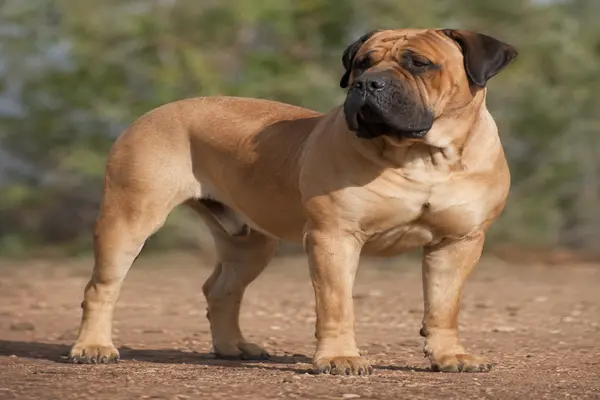
The Bullmastiff: Gamekeeper's Night Dog
The Bullmastiff was not born from a show ring or a fancier's dream. It was forged in the dark hours before dawn, patrolling the estates of Victorian England. Poachers were a genuine threat to landed wealth, and gamekeepers needed a dog that could move silently, hit hard when necessary, and think independently under pressure. The result was a breed built for guarding — not barking, not charging, but watching, intercepting, and pinning without mauling. That origin still shapes the modern Bullmastiff in ways that go far beyond its imposing silhouette.
Gamekeepers and the Need for a Silent Sentinel
By the mid-nineteenth century, English gamekeepers were frustrated. Lurchers and greyhounds could chase poachers, but they lacked the power to detain them. Bulldogs had courage but were too low-slung for sustained work. Mastiffs were powerful but sometimes too slow and conspicuous. The solution, practiced informally for decades before the Kennel Club recognized it, was crossing the two. Gamekeepers were not dog breeders in the modern sense — they were practical men solving a practical problem. They wanted a dog that could track silently, rush a poacher, and knock him flat, holding him down until the keeper arrived. The dog that emerged was roughly sixty percent Mastiff and forty percent Bulldog, though those proportions varied and were never fixed in law.
What made the Bullmastiff distinct from its parents was temperament. From the Mastiff it inherited size, bone, and a measured disposition. From the Bulldog it got a lower center of gravity, tenacity, and the willingness to engage without hesitation. But the gamekeeper needed something more: restraint. A dog that barked on sight would alert every poacher within a mile. A dog that bit indiscriminately would create legal problems. So the Bullmastiff was selected for the ability to ambush silently and control without excessive damage. That selective pressure produced a dog that is still, at its core, a quiet watcher with explosive but measured physical capability.
Ancestry: Mastiff and Bulldog in Proportion
Understanding the Bullmastiff means understanding what each parent breed contributed. The English Mastiff brought raw mass, a broad skull, and a temperament that defaults to calm. The Bulldog — and here it is important to remember that Victorian Bulldogs were taller, more athletic, and less exaggerated than many modern examples — contributed drive, a compact jaw, and a willingness to close distance quickly. The cross produced a dog that is lighter than the Mastiff but heavier than the Bulldog, faster than the Mastiff but more stable than the Bulldog.
This distinction matters when people confuse the Bullmastiff with the English Mastiff or, less commonly, with the Boerboel. The English Mastiff is a larger, heavier dog with a more passive guardian instinct — it watches and warns rather than intercepts. The Boerboel, developed in South Africa, shares the Mastiff lineage but was shaped by farm guarding against wild predators and human threats in a far more volatile environment. Boerboels tend to be more dog-aggressive, more territorial in an active sense, and more independent in decision-making. The Bullmastiff occupies a middle ground: more controlled than the Boerboel, more assertive than the Mastiff, and better suited to the kind of close-quarters household guarding that its gamekeeper origins demanded.
Physical Presence Without Exaggeration
A Bullmastiff in motion is a study in contained power. Males typically stand between twenty-five and twenty-seven inches at the shoulder and weigh between one hundred and one hundred thirty pounds. Females are smaller but still substantial. The build is square and balanced, with a deep chest, strong limbs, and a broad head that sits on a thick, slightly arched neck. The coat is short and dense, most commonly in fawn, red, or brindle, with the characteristic dark mask that gives the breed its distinctive, somewhat somber expression.
Unlike some mastiff breeds that have been pushed toward extreme size, the Bullmastiff retains a degree of athleticism that is often underestimated. These dogs can move quickly when motivated and maintain stamina for moderate periods. They are not marathon runners, but the idea that they are immobile furniture is a misunderstanding. Their physicality was designed for short bursts of decisive action — intercepting a running human, holding position against resistance, covering ground quickly in darkness. That capability remains, even if modern Bullmastiffs spend more time on carpet than on heathland.
The Watchful Quiet
One of the most consistent traits in well-bred Bullmastiffs is their silence. This is not a dog that barks at passing cars, ringing doorbells, or unfamiliar sounds in the night. The Bullmastiff watches. It registers changes in its environment with a stillness that can unsettle visitors who expect a more demonstrative reaction. When the dog does vocalize — a deep, resonant bark or a low growl — it means something has crossed a threshold. This quiet alertness makes the Bullmastiff an effective watchdog, but it also means that owners cannot rely on early warning barking in the way they might with a German Shepherd or a Rottweiler.
The flip side of this quiet watchfulness is that the Bullmastiff's first response to a perceived threat is often physical rather than vocal. It positions itself between the threat and its family, moves forward rather than backward, and acts before being told. This is exactly what gamekeepers bred for. It is also exactly what makes the breed challenging for inexperienced owners. A Bullmastiff that decides a visitor is a threat does not wait for instructions. It acts on its own judgment, and that judgment, while usually sound, can occasionally be wrong in ways that create real consequences.
Reserve and the Stranger Problem
Bullmastiffs are not social butterflies. They tend toward suspicion of unfamiliar people, and that suspicion is not easily overcome with treats or cheerful greetings. A well-socialized Bullmastiff will tolerate strangers, but it rarely warms to them quickly. It will watch, assess, and decide on its own timeline whether someone is acceptable. This reserve is a feature, not a flaw, but it requires management.
In practical terms, this means that Bullmastiffs should be introduced to new people in controlled settings. Visitors to the home should be managed carefully — the dog should be on a leash or in another room until the owner has assessed the situation and the dog has had time to observe from a distance. Rushing introductions, forcing the dog to accept petting from strangers, or allowing unfamiliar guests to enter unannounced are all recipes for trouble. The Bullmastiff's protective instinct is not aggression, but it can look and feel very similar to someone who does not understand the difference.
Attachment to Household and Children
Inside the family, the Bullmastiff tends to be affectionate in a quiet, physical way. It wants to be near its people, often positioning itself in the center of household activity or leaning against legs with the casual weight of a small boulder. This attachment is genuine but not clingy. The Bullmastiff does not typically suffer from separation anxiety in the dramatic sense, though it clearly prefers being with its family to being alone.
With children, the Bullmastiff can be remarkably gentle — patient with crawling toddlers, tolerant of clumsy petting, and tolerant of the noise that accompanies family life. But the size differential creates risks that have nothing to do with temperament. A hundred-pound dog moving through a doorway can knock a small child flat without meaning to. A dog that lies down in a hallway becomes an obstacle that a running child can trip over. Accidental physical impact is a real concern, and families with young children should understand that supervision is not about preventing bites — it is about preventing the kind of collisions that happen when large and small creatures share the same space.
Establishing Boundaries Early
Bullmastiffs grow quickly. A puppy that fits in your lap at eight weeks will weigh sixty pounds by six months and reach full size within a year. This rapid growth makes early training not just advisable but essential. A puppy that is allowed to jump on people, pull on the leash, or push through doorways becomes an adolescent that is physically difficult to manage and has learned that its size gives it what it wants.
Basic obedience — sit, stay, down, leave it, come — should be established early and reinforced consistently. The Bullmastiff is intelligent but not inherently obedient. It responds to fair, firm leadership and has little patience for inconsistency or harsh correction. Positive reinforcement works best, but it must be combined with clear boundaries and follow-through. A Bullmastiff that learns it can ignore commands because the owner will eventually give up has learned a lesson that is very difficult to unlearn.
House manners matter as much as formal obedience. Doorways, stairways, and feeding areas are all places where a large dog can become possessive or pushy. Teaching the Bullmastiff to wait at doors, to move off furniture on command, and to settle in its own space during mealtimes establishes a pattern of respect that pays dividends as the dog matures. These are not tricks or optional exercises — they are the daily framework that keeps a powerful dog manageable in a domestic setting.
Managing Around Visitors
The Bullmastiff's natural suspicion of strangers means that visitors require planning. The dog should not have unsupervised access to the front door. A leash, a baby gate, or a closed room provides the separation needed to introduce people safely. Once the initial introduction is made, the Bullmastiff usually settles, but the first few minutes are critical.
Guests who understand the breed do better than those who do not. Telling visitors to ignore the dog, avoid direct eye contact, and let the Bullmastiff approach on its own terms reduces tension. Asking them to pet the dog from the side rather than reaching over the head, and to keep their voices calm, prevents the kind of sudden movements that trigger alertness. This is not coddling the dog — it is managing a predictable temperament in a way that keeps everyone comfortable.
Delivery personnel, maintenance workers, and other recurring visitors present a particular challenge. The Bullmastiff tends to categorize people as either familiar or unfamiliar, and it does not update that categorization easily. A postal carrier who comes daily may be viewed as an intruder for months before the dog accepts their presence. Consistent, calm management during these interactions prevents escalation.
Other Dogs and Social Friction
Bullmastiffs can coexist peacefully with other dogs, but introductions require care and the breed is not naturally diplomatic in dog-to-dog encounters. Males, in particular, may test other dogs for status, and same-sex pairings can become contentious as both dogs mature. The Bullmastiff's physical power means that a disagreement that would be a minor scuffle with smaller breeds becomes a serious event.
Dog parks are rarely a good fit for the breed. The Bullmastiff's play style — physical, direct, and sometimes forceful — can provoke reactions from other dogs, and the Bullmastiff's response to provocation is not to back down. Controlled, one-on-one introductions in neutral territory, with both dogs on leash, give the best chance of a successful pairing. Some Bullmastiffs live happily with other household pets from puppyhood. Others never accept canine housemates. Honest assessment of the individual dog's temperament is more useful than breed-level generalizations.
Exercise: Measured and Purposeful
The Bullmastiff needs daily exercise, but its requirements are moderate compared to working sporting breeds or herding dogs. A solid walk of thirty to forty-five minutes, twice a day, meets most adults' needs. Puppies and adolescents benefit from shorter, more frequent outings that protect developing joints while burning energy. The breed enjoys outdoor time but is sensitive to heat, and its brachycephalic tendencies (inherited from the Bulldog side) make vigorous exercise in hot weather a risk.
What the Bullmastiff does not need is exhaustive athletic activity. Long-distance running, extended fetch sessions, and forced jogging are hard on the joints and unnecessary for a breed whose natural exercise pattern was short bursts of intense effort followed by long periods of rest. Mental exercise — scent work, puzzle toys, short training sessions — often satisfies the breed better than physical endurance tests. A Bullmastiff that is mentally engaged is calmer and more settled than one that is merely tired.
The breed's tendency toward weight gain requires some attention to portion control and activity levels, but this is best managed through routine rather than structured exercise programs. A dog that lives actively within the normal patterns of household life — walking, playing, exploring the yard — maintains condition better than one that is sedentary for twenty hours and then taken on a five-mile hike.
Drool and the Daily Mess
Prospective owners should understand that Bullmastiffs drool. Not occasionally, not subtly, but with a consistency and volume that affects daily life. Drinking water produces drips. Anticipation of food produces streams. Heat and exertion increase production. The drool lands on floors, furniture, clothing, and anyone within a two-foot radius of the dog's head.
Practical management means keeping towels in multiple rooms, wiping the dog's face after drinking, and accepting that certain surfaces — velvet, dark upholstery, light carpet — will bear evidence of the dog's presence. This is not a cleanliness issue or a health concern. It is simply the reality of living with a breed that was built with loose flews and a deep flews designed to manage drool without discomfort. People who are bothered by mess should factor this into their decision honestly.
Related to the drool is the breed's general approach to hygiene. Bullmastiffs shed moderately year-round, with seasonal increases. Their short coat is easy to brush, but the hair works into fabrics and furniture. Regular brushing reduces loose hair in the home, and a good vacuum cleaner is not optional.
Health and Longevity: Practical Awareness
Bullmastiffs are a large breed with the health considerations that large breeds tend to share. Joint problems, including hip and elbow dysplasia, appear in the breed with enough frequency that screening of breeding stock matters. Bloat, the sudden and dangerous twisting of the stomach, is a risk in deep-chested breeds, and owners should know the signs and have a plan for emergency veterinary care. Certain cancers appear at higher rates in Bullmastiffs than in the general dog population, and the breed's average lifespan of eight to ten years reflects the toll that size takes on a body.
Responsible breeders health-test their stock, provide veterinary records, and are forthcoming about the conditions that appear in their lines. Prospective owners should ask hard questions and expect honest answers. A breeder who claims their dogs have no health issues is either uninformed or dishonest. The goal is not perfection but responsible management of known risks.
Why Experience Matters
The Bullmastiff is not a beginner's dog. This is not a judgment about the breed's difficulty but an acknowledgment that its combination of size, protective instinct, and independent thinking requires a handler who understands dog behavior at a level beyond basic obedience. The decisions a Bullmastiff makes are fast and physical. A handler who cannot read the dog's body language, anticipate its reactions, and intervene before a situation escalates is at a disadvantage that no amount of good intention can overcome.
Experienced owners understand that management is not failure. They know that a muzzle in public, a leash in the house when guests arrive, and a crate during delivery hours are tools, not punishments. They recognize that a Bullmastiff's trust is earned slowly and that the breed's loyalty to its family, while genuine, does not extend to an obligation to accept every stranger who walks through the door.
People considering their first mastiff-type dog often start with the English Mastiff, whose more passive temperament is more forgiving of handler error. The Bullmastiff's higher drive and quicker physical responses leave less room for mistakes. This does not make the breed unsuitable for committed newcomers, but it does mean that the learning curve is steeper and the consequences of mismanagement are more immediate.
For the right owner — someone who respects the breed's guarding heritage, understands the need for structure, and is prepared for the daily realities of living with a large, drooling, quietly watchful dog — the Bullmastiff offers something that fewer demonstrative breeds do not: a guardian that protects without performance, that loves without spectacle, and that watches the world with a calm, steady gaze that says less than it sees.