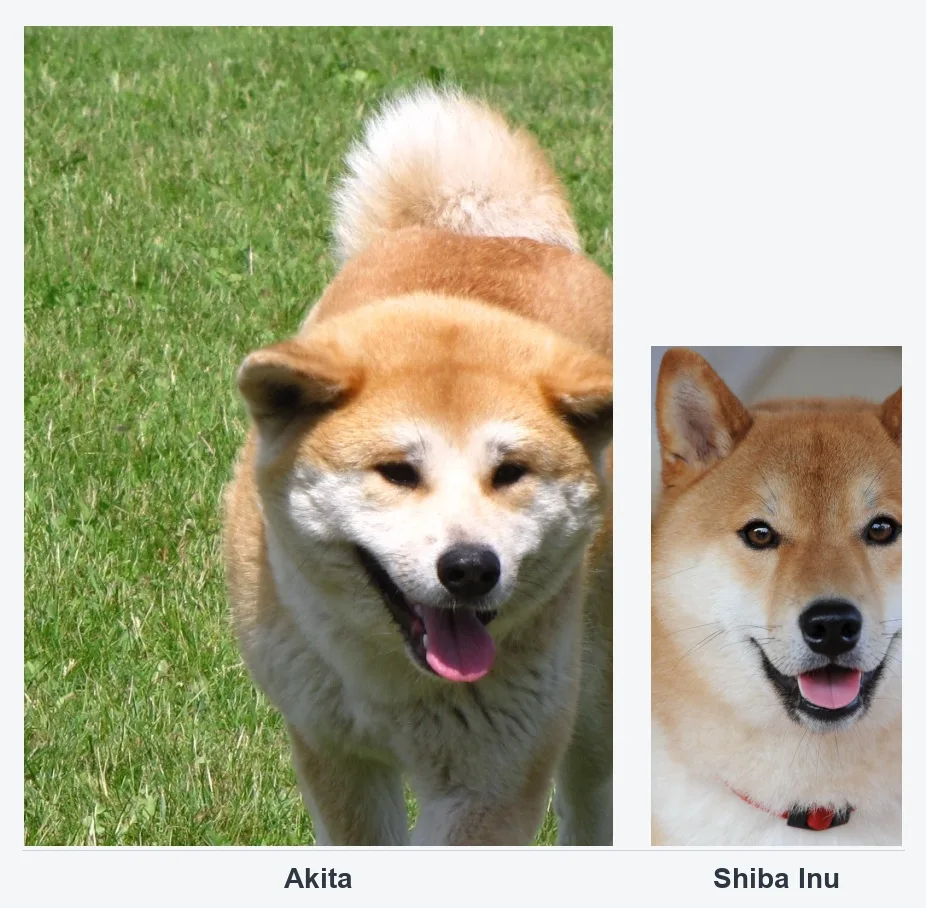
An Akita and a Shiba Inu can look surprisingly similar in photos. They share the plush double coat, the curled tail, the spitz heritage, and even the same Japanese roots. But beyond the looks, these two breeds could not be more different. Instead of thinking of them as "small Akitas" or "big Shibas," it is more useful to see each dog on its own terms.
This article will help you understand how the Akita and the Shiba Inu differ before you make one of the most important decisions of your life. And if you are considering either breed, please also consult the official standards from organizations such as the American Kennel Club and the Japan Kennel Club for the fullest, most accurate picture.
The Akita and Shiba Inu at a Glance
The short version first. The Akita is a large, powerful dog with a grave, dignified bearing. The Shiba Inu is a much smaller dog with a bold, fox-like look that photographs well.
| Trait | Akita | Shiba Inu |
|---|---|---|
| Size | Large | Small |
| Typical adult weight | 70–130 lb (32–59 kg) | 17–24 lb (8–11 kg) |
| Personality | Loyal, dignified, and sometimes stubborn | Lively, confident, and spirited |
| Training challenge | Moderate to high: needs firm, consistent handling | Moderate: smart and independent |
| Around unfamiliar dogs | Often dog-aggressive | Typically friendly but can be choosy |
| Coat | Plush double coat, sheds heavily | Plush double coat, sheds heavily |
| Best fit | Experienced owners, singles, spacious homes | First-time owners, apartments, adventures |
The table above is a summary. The sections below dig into the details that really matter.
Height and Weight
The size difference between the Akita and the Shiba Inu is dramatic. The Akita male stands roughly 26 to 28 inches (66–71 cm) at the shoulder; the Shiba Inu male stands roughly 14.5 to 16.5 inches (37–42 cm) at the shoulder.
An adult Akita usually weighs somewhere between 70 and 130 pounds (32–59 kg), depending on sex, age, and breeding line. An adult Shiba Inu usually weighs between 17 and 24 pounds (8–11 kg).
That makes the Akita more than 4 times heavier than the Shiba on average, and anywhere from 1.6 to 1.9 times taller.
Personality and Temperament
The Akita is quietly confident. Akitas are known for being loyal to their people, calm in the house, and famously devoted to family. They can also be willful. An Akita that does not respect its handler's authority is difficult to manage, which is why the breed suits owners with experience and consistency.
The Shiba Inu, by contrast, is spirited and independent. Shibas are playful, alert, and endlessly entertaining, but they are not eager-to-please dogs in the way a Labrador is. A Shiba will happily train you to meet its expectations instead of the other way around.
Same-Job Dogs
In many ways, both breeds fill the same job. Historically, the Akita was used for guarding and large-game hunting (bears and boar); the Shiba was used for hunting small game and flushing birds. Both are guardian breeds at heart, and both need an owner who understands their dignity and their drive.
Training and Socialization
Training Akitas and Shibas is not about teaching tricks. It is about building trust in both directions, setting boundaries, and staying consistent. For both breeds, here are a few practical tips:
- Start early. Socialize and train puppies from day one. The window for safe socialization closes faster than most owners expect.
- Use positive reinforcement. Both breeds respond far better to praise and rewards than to harsh corrections.
- Keep sessions short. Both the Akita and the Shiba lose interest quickly. Short, frequent sessions beat long, boring ones.
- Be consistent. What is allowed one day must be allowed every day. Both breeds notice inconsistencies instantly.
Note: the Akita was historically used as a fighting dog, and its tendency to push boundaries is built into the breed. The Shiba, as a hunting breed, has a strong prey drive.
Around Other Pets and Children
Neither breed is naturally "dog-park friendly" in the way a Golden Retriever might be.
Akitas that are not carefully socialized can be aggressive toward other dogs, especially same-sex dogs. Many experienced owners keep Akitas as the only dog in the home, or manage introductions carefully. Around children they are typically good when raised with them, but their size and strength mean supervision is essential.
The Shiba Inu is much smaller and usually friendly with other dogs, though it can be picky about who it likes. Shibas are also known for their "Shiba scream" — a high-pitched shriek some Shibas use when they feel cornered or unhappy. In a family home, the Shiba is more forgiving of a small living space but still needs structure and a calm, consistent owner.
Grooming, Trainability, and Exercise
Both breeds have a plush double coat that sheds heavily. They are similar to own in most practical ways, with a few sensible differences:
| Trait | Akita | Shiba Inu |
|---|---|---|
| Grooming | Heavy seasonal blow-out, brush weekly | Heavy seasonal blow-out, brush weekly |
| Trainability | Moderate to high difficulty | Moderate difficulty |
| Exercise needs | High: long walks daily plus play | Moderate: brisk walks daily plus play |
| Space needs | Large home + secure fenced yard | Apartment-friendly |
Which Dog Is Right for You? Final Thoughts
The choice between the Akita and the Shiba Inu comes down to your lifestyle, not a contest between the two dogs.
Choose the Akita if you have space, you are physically strong enough to handle a 100-pound dog, and you want a quiet, fiercely loyal companion that will bond deeply with you and your family.
Choose the Shiba Inu if you want a smaller, more manageable package with a similar stubborn streak, a big personality in a compact body, and a dog that can thrive in an apartment.
You already know your own lifestyle better than anyone. Whatever you build for your dog — an apartment or a larger house — the bond is what matters.
Frequently Asked Questions
Is a Shiba Inu a small Akita?
No, a Shiba Inu is not a small Akita. It is a separate, much older breed with its own distinct heritage. The two breeds share common ancestors, but the Shiba was selectively bred to be much smaller and quicker, while the Akita grew into a large, dignified guardian.
Which is stronger, an Akita or a Shiba Inu?
An Akita is much stronger than a Shiba Inu. The Akita is a large, powerful breed built to fight bears and boar, while the Shiba is built for bolting small prey. Weight alone makes the difference: an adult Akita outweighs most adult Shibas by 4 times or more.
Are Akitas good family dogs?
Akitas can be good family dogs when raised with children and trained consistently. They bond deeply with their families and are generally protective. Their size, strength, and potential for same-sex dog aggression mean supervision and early socialization are essential.
Are Shibas good for first-time owners?
Shiba Inus can work for first-time owners who commit to early socialization and consistent training. They are smart, clean, and manageable in size. Their stubborn, independent streak means they are not the easiest first dog, but they reward owners who put in the effort.
Which breed is healthier, Akita or Shiba?
Both breeds are generally healthy, but the Akita has more breed-specific health concerns, including hip dysplasia and autoimmune disorders. The Shiba tends to have fewer genetic issues, though it still needs screening for patellar luxation and eye conditions.